IoT-Enabled Quality: How Connected Sensors Transform Manufacturing Quality
Learn how Internet of Things (IoT) sensor networks provide the real-time data foundation that powers every Quality 4.0 capability — from SPC to predictive analytics.
John Lee
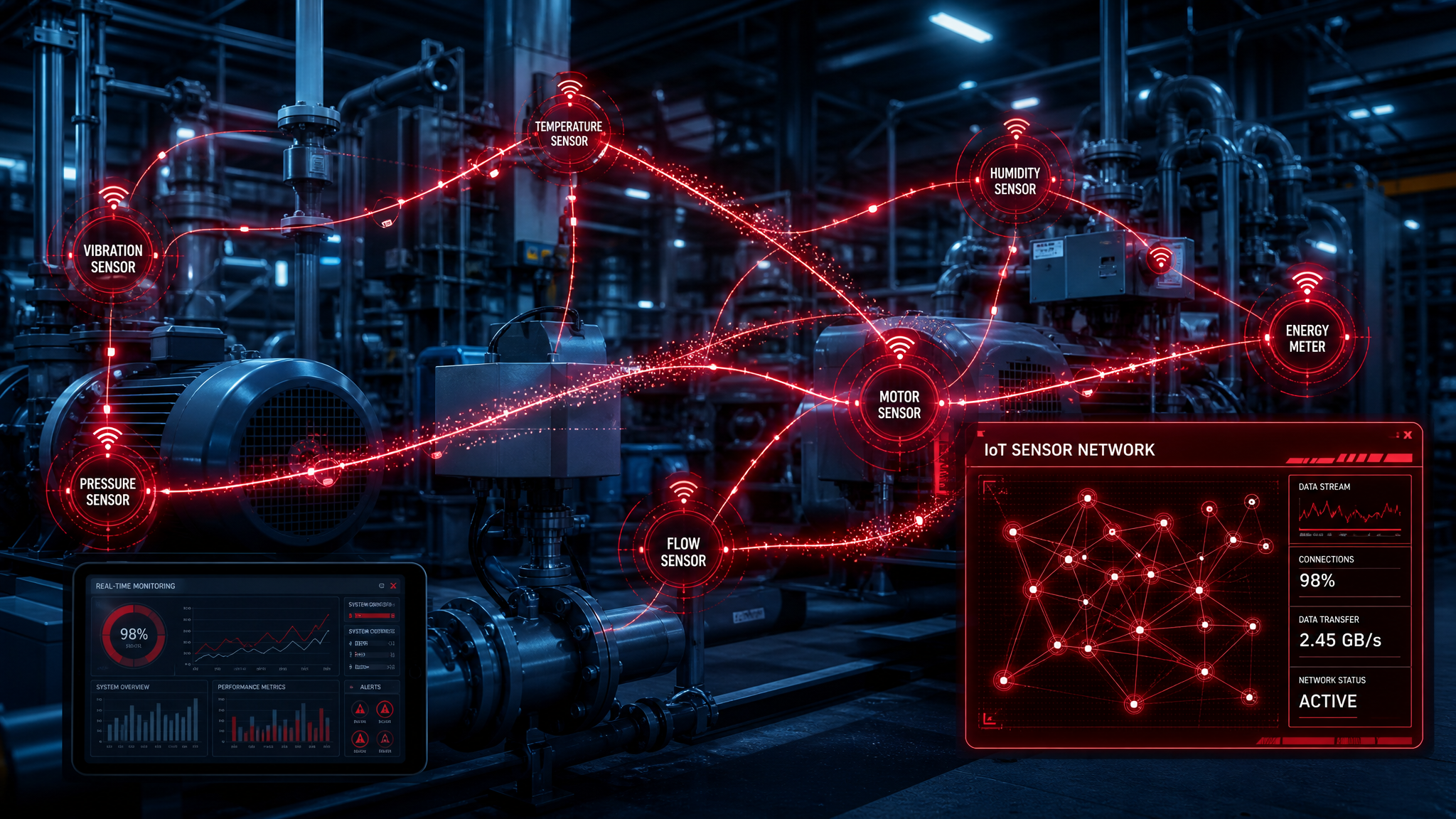
Illustrative image generated using AI; any people depicted are not real individuals.
If data is the fuel that powers Quality 4.0, IoT sensors are the pumps. Without connected sensors providing continuous, reliable process data, every advanced capability — real-time SPC, predictive analytics, digital twins, AI-powered inspection — is impossible. IoT is not just a Quality 4.0 enabler; it is the foundation layer.
The Quality Data Revolution
Traditional quality data collection was a sampling exercise. An operator measured 5 parts per hour, recording results on a paper form. With IoT sensors, you capture data from every part, every second. The difference is staggering: where a manual SPC program might generate 50 data points per shift per characteristic, a single IoT sensor generates 50 data points per second.
This volume of data fundamentally changes what is possible. You can detect micro-trends that periodic sampling would miss entirely. You can correlate quality outcomes with process parameters at a granularity that was previously unthinkable. According to McKinsey's 2024 Smart Manufacturing report, manufacturers using IoT-enabled quality monitoring achieve 20–30% faster defect detection compared to traditional sampling methods.
Sensor Types for Quality Applications
Quality-focused IoT deployments typically include these sensor categories:
- Process Parameter Sensors: Temperature, pressure, flow rate, speed, torque — the independent variables that determine quality outcomes. These sensors monitor whether your process is running within the established operating window.
- Environmental Sensors: Ambient temperature, humidity, particulate counts, and vibration levels. Environmental factors are often overlooked quality variables that explain unexplained variation. A plastics injection molder discovered that 30% of their dimensional variation was explained by shop floor humidity — a factor invisible without IoT monitoring.
- Product Measurement Sensors: Inline laser micrometers, vision systems, ultrasonic thickness gauges, and weight sensors that measure product characteristics during production rather than after.
- Machine Health Sensors: Vibration, acoustic emission, and current draw sensors that monitor equipment condition. Machine degradation is a leading cause of quality problems — detecting it early prevents quality escapes.
Architecture: From Sensor to Insight
A well-designed IoT quality architecture follows the edge-to-cloud model:
- Edge Layer: Sensors connect to edge gateways that perform initial data processing — filtering noise, calculating derived values, and handling local buffering in case of network interruptions. This reduces bandwidth requirements by 60–80% compared to streaming raw data.
- Communication Layer: Processed data flows via MQTT or OPC-UA to the cloud or on-premise analytics platform. Message queuing ensures no data is lost during network disruptions.
- Analytics Layer: The QMS and SPC platform consumes sensor data, calculating control statistics, updating dashboards, and feeding predictive models. This is where data becomes actionable quality intelligence.
- Action Layer: Alerts, work instructions, and automated responses based on analytics findings. The most advanced implementations include closed-loop control where analytics outputs adjust machine parameters directly.
Practical Implementation Guidance
Begin with a focused pilot on one production line or process cell. Identify the 5–10 most critical quality characteristics and the process parameters that most strongly influence them. Install sensors for these parameters first. Use the pilot to prove ROI and develop organizational competence before expanding.
Data governance is critical from day one. Establish sensor calibration schedules, data validation rules, and storage retention policies. IoT data that cannot be trusted is worse than no data at all — it creates false confidence while hiding real problems.
According to IoT Analytics, the average payback period for IoT quality monitoring investments is 8–14 months, with the fastest ROI coming from scrap reduction and inspection labor savings.
Frequently Asked Questions
What types of IoT sensors are used in manufacturing quality management?
How many IoT sensors does a typical smart factory deploy for quality monitoring?
What communication protocols do IoT quality sensors use?
About the Author
John Lee
Founder & Quality Systems Architect
John Lee brings over 20 years of hands-on experience in quality management across automotive, aerospace, and medical device manufacturing. As the founder of IntelligentQMS, he has helped organizations worldwide implement robust quality management systems that drive operational excellence.
Related Articles
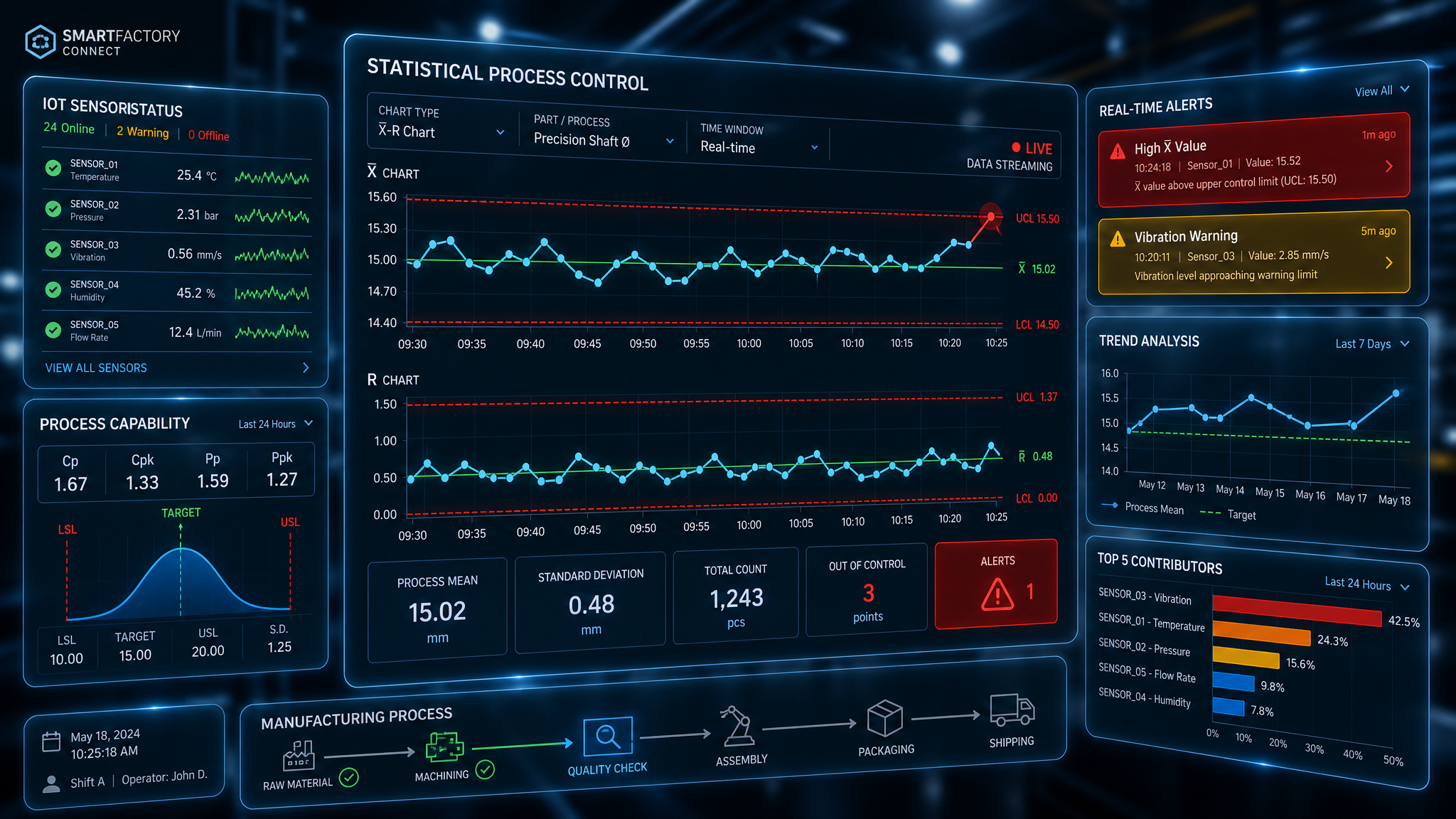
Real-Time SPC in the Age of Quality 4.0: From Manual Charts to Automated Process Control
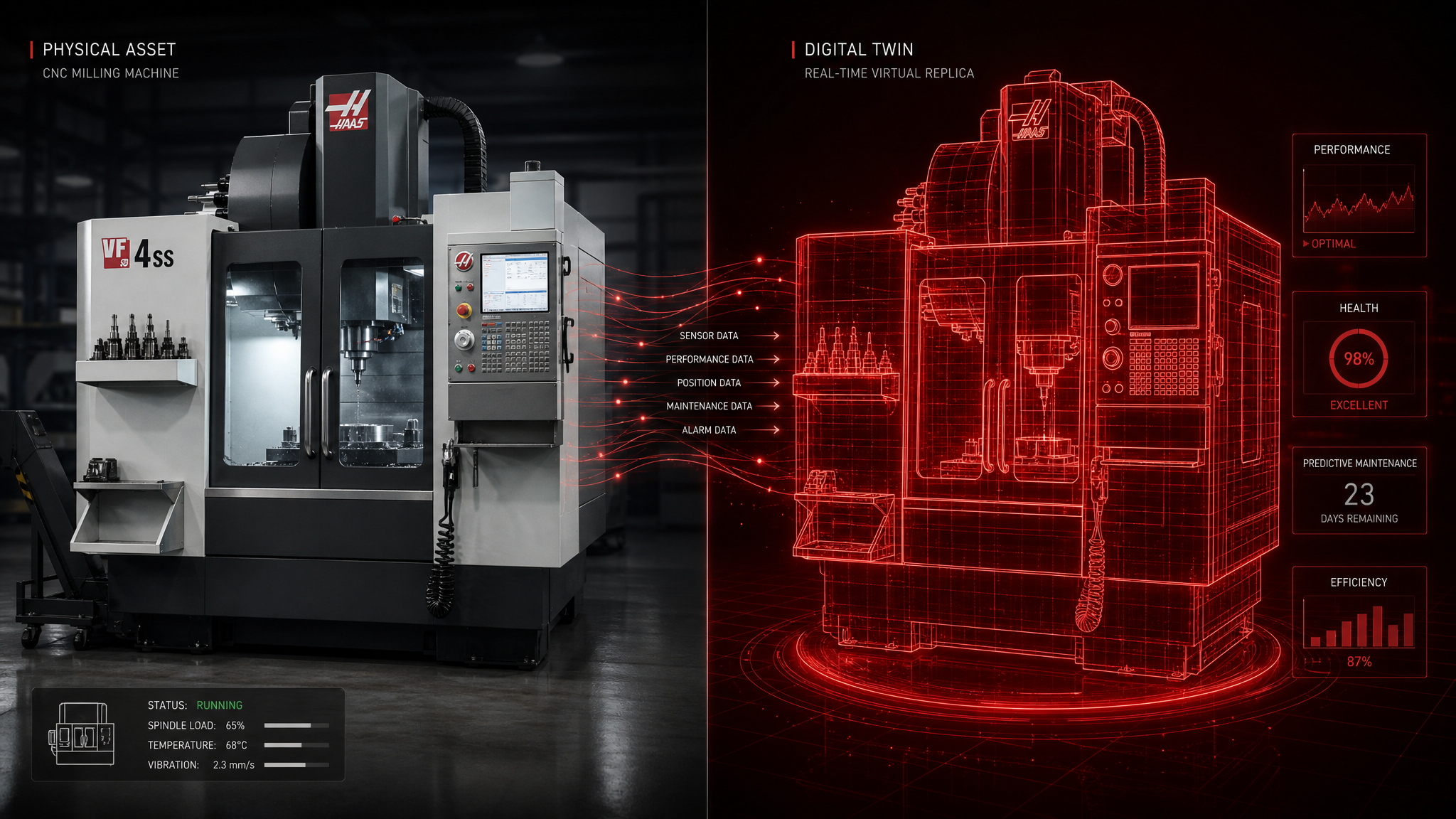
Digital Twins for Quality Management: Simulating Processes Before They Fail