Building Your Quality 4.0 Roadmap: A Step-by-Step Implementation Framework
A practical, phased implementation framework for Quality 4.0 — from assessing your starting point to achieving predictive quality operations within 24 months.
John Lee
Illustrative image generated using AI; any people depicted are not real individuals.
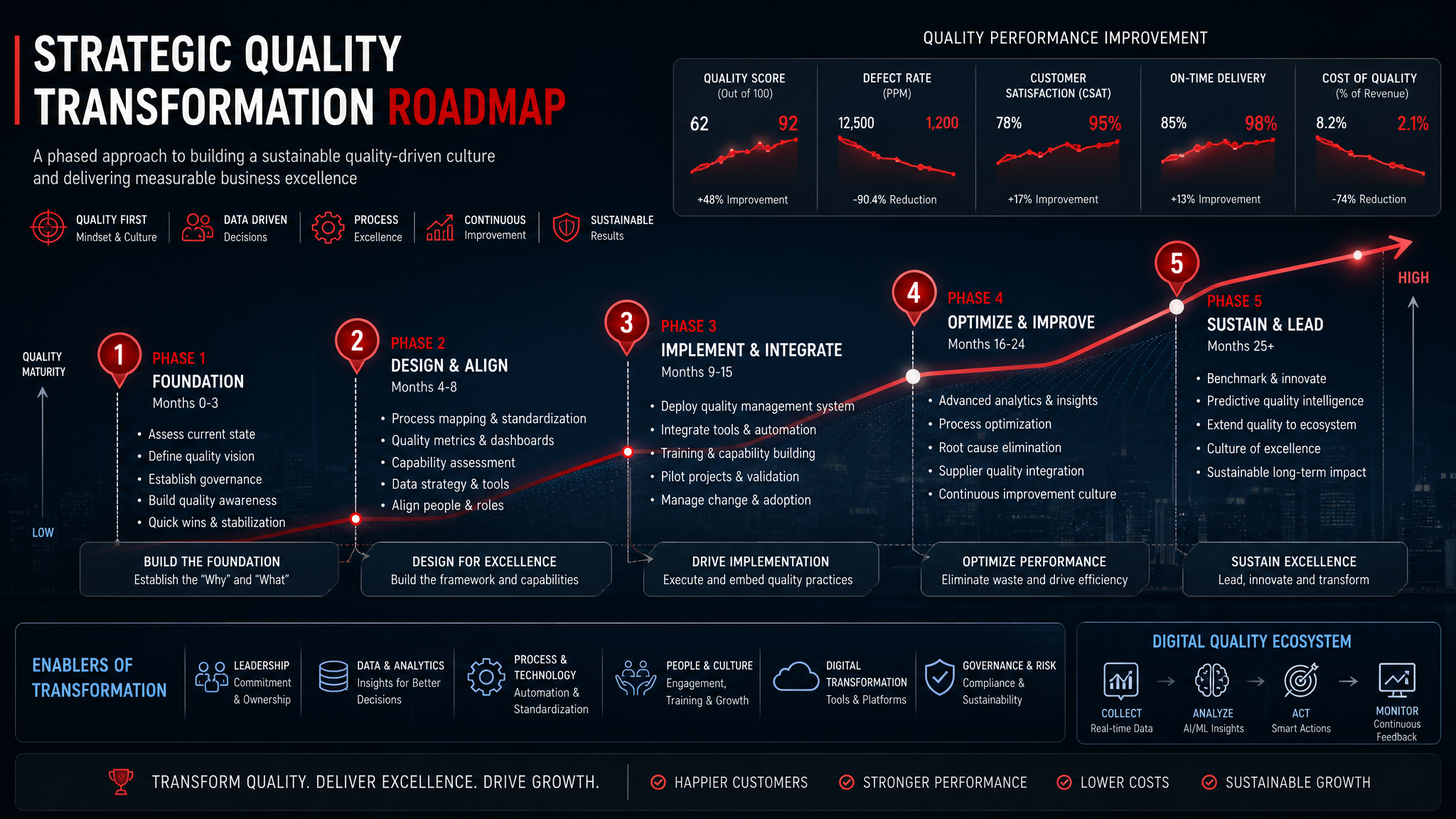
Quality 4.0 is not a destination — it is a journey. And like any complex journey, it requires a well-planned roadmap. Organizations that try to implement everything at once — IoT sensors, AI analytics, digital twins, blockchain traceability — inevitably fail. Those that take a phased, value-driven approach build momentum, prove ROI, and sustain executive support over the 18–36 month transformation timeline.
This roadmap framework is based on implementation patterns from over 50 manufacturers across automotive, aerospace, medical device, and industrial electronics sectors.
Phase 0: Assess and Strategize (Months 1–2)
Before investing in any technology, assess your current state and define your Quality 4.0 vision.
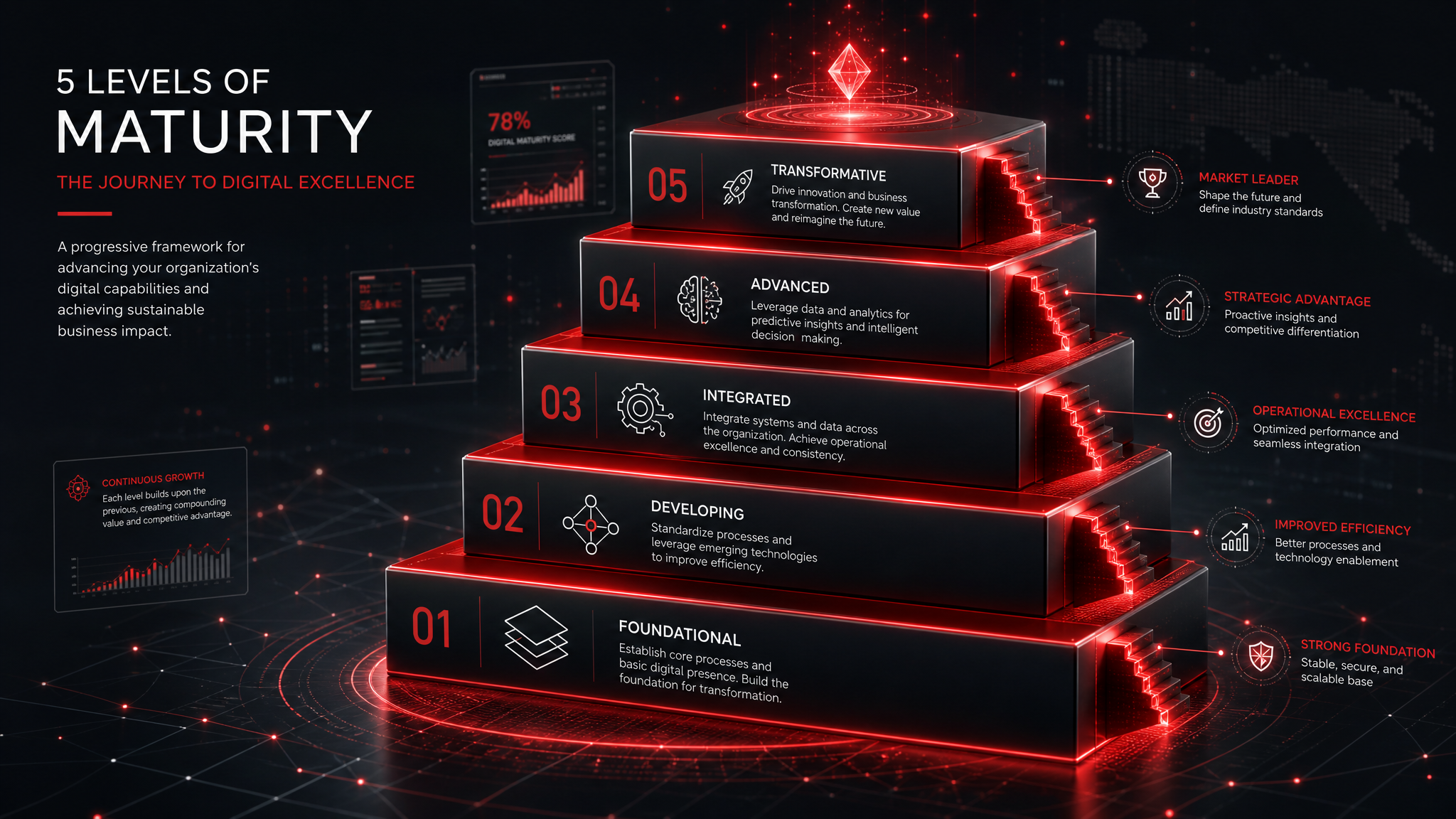
- Maturity Assessment: Use the Quality 4.0 Maturity Model to evaluate your current level across all six dimensions. Be honest — overestimating your starting point leads to unrealistic timelines and failed initiatives.
- Pain Point Mapping: Identify the top 3–5 quality challenges that cost your organization the most in scrap, rework, customer complaints, or compliance risk. These become your priority use cases.
- Stakeholder Alignment: Quality 4.0 requires sponsorship from both quality leadership and IT/digital leadership. Align both groups on the vision, the phased approach, and the expected business outcomes.
- Quick ROI Identification: Find 1–2 opportunities where digital tools can deliver measurable improvement within 90 days. These quick wins build credibility and momentum.
Phase 1: Foundation (Months 2–8)
Phase 1 builds the digital foundation that all subsequent capabilities require.
Deploy a Cloud-Based QMS
If your current QMS is paper-based, spreadsheet-driven, or an outdated on-premise system, replacing it with a modern cloud QMS is the single highest-impact action. This provides the central platform for document control, CAPA management, audit tracking, and supplier quality — and the API infrastructure needed for future integrations.
Establish Data Governance
Define data standards: How are part numbers formatted? What units are used? How are process parameters named? Inconsistent data naming and formatting is the number-one cause of failed analytics projects. Establish governance now, before data volume increases by 100×.
Begin IoT Pilot
Select one critical process and install IoT sensors for the 5–10 most important process parameters. Connect these sensors to your SPC system. The goal is not comprehensive coverage — it is learning how to collect, transmit, and use real-time data while delivering value on one process.
Phase 2: Connect and Analyze (Months 6–16)
With the foundation in place, Phase 2 expands connectivity and introduces analytics.
Expand IoT Coverage
Based on lessons from the Phase 1 pilot, instrument additional critical processes. Prioritize based on quality risk and business impact. Standardize the sensor architecture, communication protocols, and edge computing approach.
Integrate Systems
Connect your QMS, ERP, and MES through APIs. The goal is bidirectional data flow: process data from the MES feeds quality analytics, while quality events in the QMS trigger workflows in the ERP (supplier holds, customer notifications).
Deploy Descriptive and Diagnostic Analytics
Build real-time dashboards that aggregate quality data across processes and data sources. Implement automated Pareto analysis, trend detection, and correlation analysis. Train quality engineers to use these tools for data-driven root cause analysis.
Phase 3: Predict and Optimize (Months 14–24)
Phase 3 introduces the AI/ML capabilities that define Quality 4.0 maturity.
Build Predictive Models
Using the data infrastructure from Phases 1 and 2, train predictive quality models for your highest-impact processes. Start with supervised learning models that predict quality outcomes from process parameters. Validate rigorously before deployment.
Implement Digital Twins
For the most critical processes, build digital twins that combine physics-based models with ML. Use them for process optimization, new product introduction (NPI) simulation, and preventive action planning.
Automate Quality Intelligence
Configure your system to automatically detect anomalies, trigger investigations, recommend corrective actions, and generate management reports. The goal is reducing the time quality engineers spend on data gathering and routine analysis — freeing them for higher-value problem-solving and improvement activities.
The People Side: Change Management
Technology adoption fails without change management. Throughout all three phases:
- Invest in Training: Budget 15–20% of your Quality 4.0 investment for workforce development. Data literacy, analytics tools, and digital collaboration skills are essential.
- Celebrate Wins: Publicize every measurable improvement — scrap reduction, faster CAPA closure, prevented defects. Success stories build organizational buy-in.
- Empower, Don't Replace: Position Quality 4.0 as a toolkit that makes quality professionals more effective — not technology that replaces them. The quality engineer who can leverage AI insights is exponentially more valuable than the AI system alone.
Measuring Progress
Track these KPIs throughout your Quality 4.0 journey:
- Cost of Poor Quality (COPQ) as a percentage of revenue
- First Pass Yield (FPY) across key processes
- Customer complaint rate (PPM)
- Mean time to detect quality issues
- Mean time to resolve corrective actions
- Percentage of quality decisions made with real-time data
- Quality team time spent on data gathering vs. analysis and improvement
Each phase should show measurable improvement in at least 3 of these KPIs. If progress stalls, reassess your approach before moving to the next phase.
Frequently Asked Questions
How long does a Quality 4.0 transformation take?
What is the typical budget for a Quality 4.0 implementation?
What are the biggest barriers to Quality 4.0 adoption?
About the Author
John Lee
Founder & Quality Systems Architect
John Lee brings over 20 years of hands-on experience in quality management across automotive, aerospace, and medical device manufacturing. As the founder of IntelligentQMS, he has helped organizations worldwide implement robust quality management systems that drive operational excellence.
Related Articles
What Is Quality 4.0? Definition, Principles, and the Evolution from Quality 1.0 to 4.0
Quality 4.0 Maturity Model: Assessing Your Organization's Digital Quality Readiness