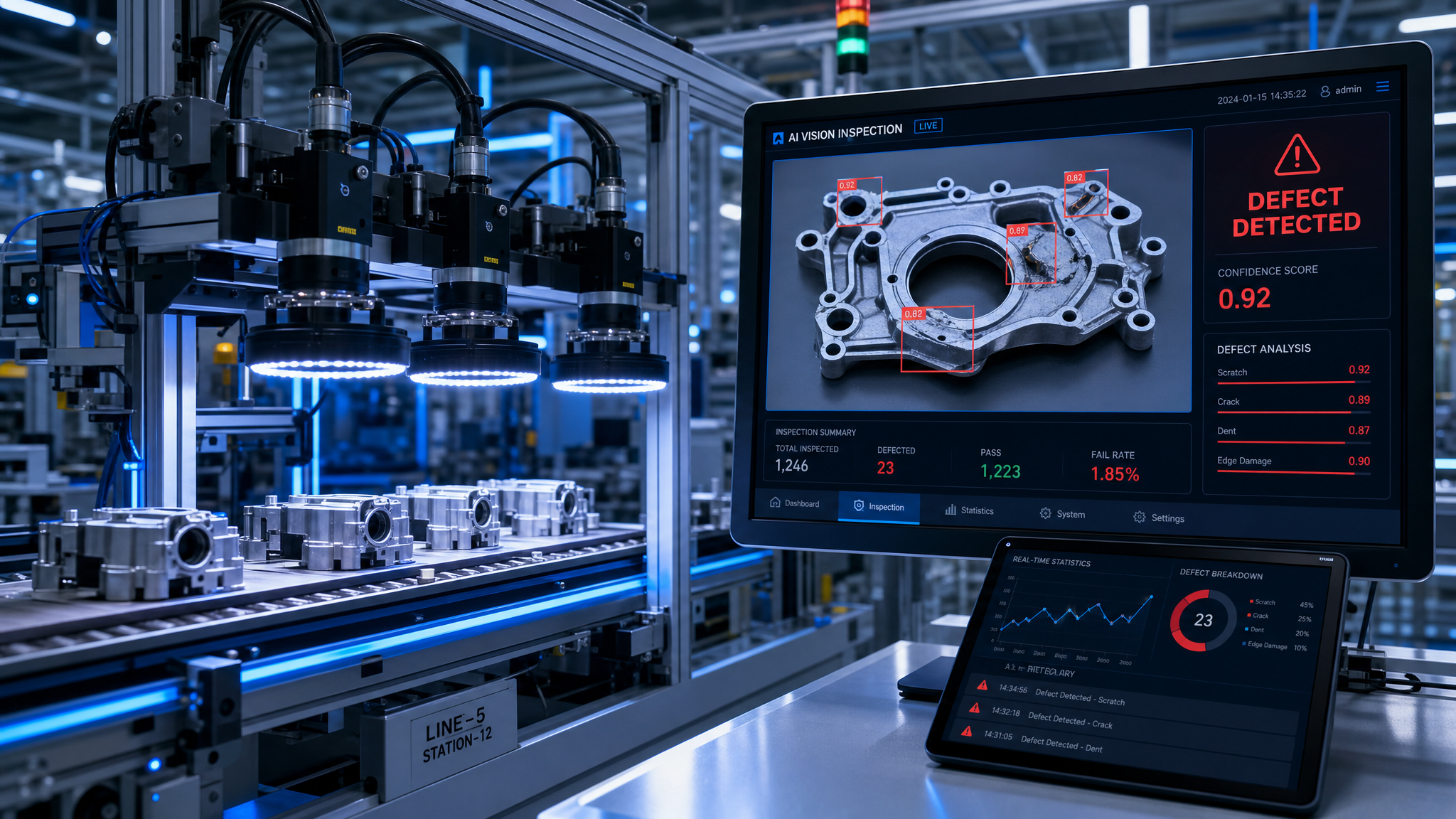
AI-Generated Project Charters: How Artificial Intelligence Is Accelerating Quality Improvement Planning
Discover how AI-powered quality management systems can automatically generate project charters from existing project data — reducing setup time from hours to seconds while maintaining professional rigor.
John Lee
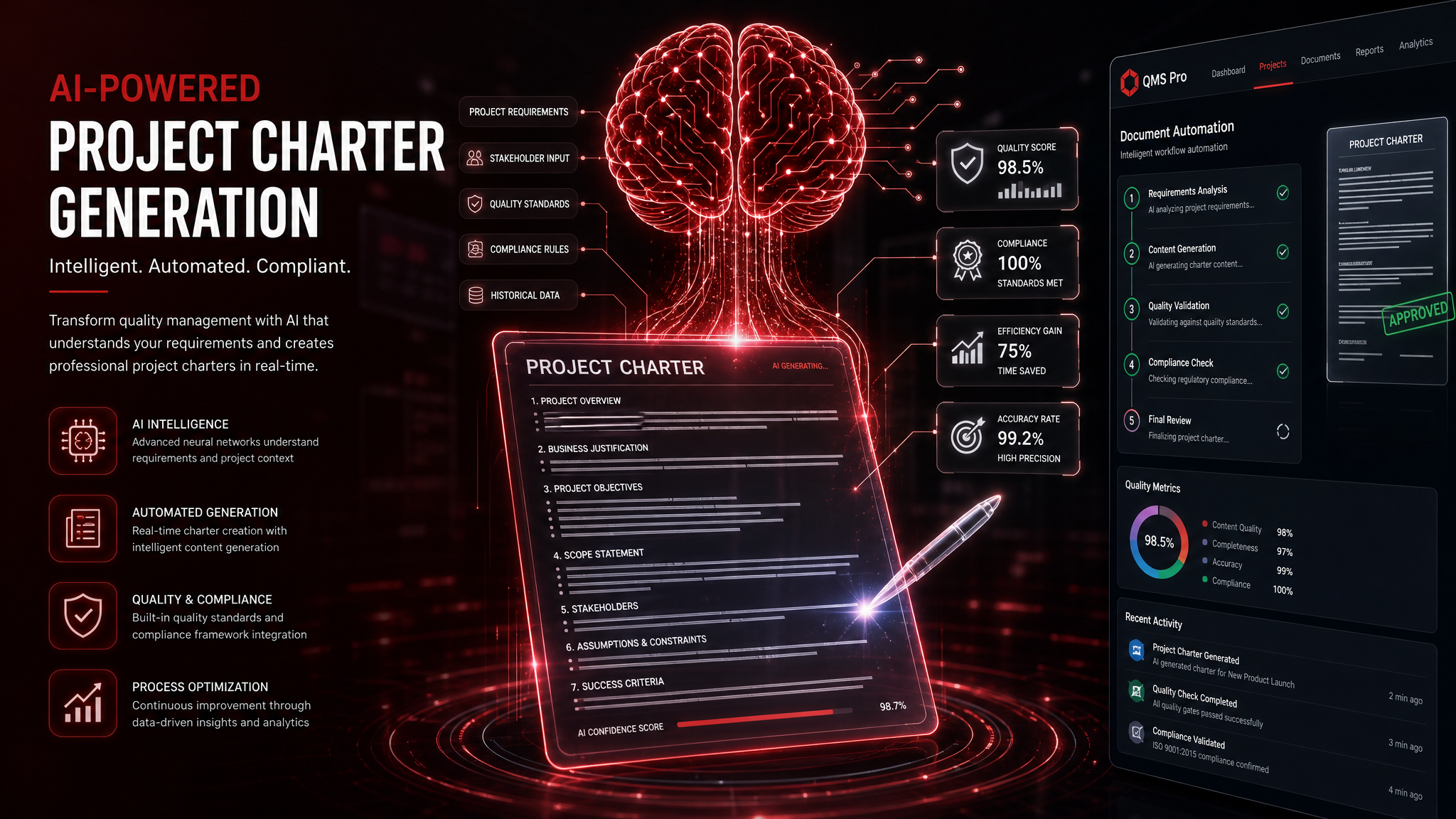
Illustrative image generated using AI; any people depicted are not real individuals.
For decades, writing a project charter has been a manual, time-consuming process. A quality engineer sits down with a blank template, pulls data from multiple sources — ERP systems, complaint databases, SPC software, org charts — and assembles a charter over several hours. The result is often good, but the process is slow enough that many improvement projects launch without a formal charter at all.
Artificial intelligence is changing this equation. Modern AI-powered quality management platforms can now generate comprehensive project charters in seconds by analyzing the project data already in the system. This is not about replacing the quality professional's judgment — it is about eliminating the mechanical assembly work so they can focus on strategic thinking.
How AI Charter Generation Works
AI charter generation follows a straightforward pipeline:
- Data aggregation: The system pulls all available data for the project — title, description, type, priority, team assignments, dates, scope, linked non-conformances, corrective actions, audit findings, and historical metrics.
- Context analysis: The AI model analyzes the aggregated data to understand the project's purpose, industry context, and quality framework (Six Sigma, APQP, Lean).
- Template selection: Based on the project type, the system selects the appropriate charter format — a streamlined DMAIC format or a comprehensive APQP controlled document.
- Content generation: The AI writes each section of the charter — problem statement, objectives, business case, scope, team structure, timeline, and metrics — using the project data as input and quality management best practices as the framework.
- Output formatting: The completed charter is formatted for professional presentation, ready for review and approval.
What AI Gets Right
AI excels at several charter elements that are tedious for humans:
- Problem statement formulation: AI can synthesize data from multiple sources — defect trends, customer complaints, financial records — into a quantified problem statement that follows best-practice structure.
- SMART objective writing: Given baseline metrics and project descriptions, AI generates measurable objectives with specific targets and timeframes.
- Team structure documentation: AI automatically populates team rosters from project assignment data, including roles, departments, and contact information.
- Timeline mapping: AI maps project dates to the appropriate methodology phases (DMAIC or APQP) and generates milestone schedules.
- Cross-referencing: AI links related quality records (CARs, NCRs, audit findings) into the charter's context section, providing the traceability that auditors value.
Where Human Judgment Remains Essential
AI-generated charters are strong first drafts, not final documents. Human review is essential for:
- Strategic alignment: Only the project champion can confirm that the project aligns with organizational strategy and deserves resources.
- Political context: Team dynamics, stakeholder sensitivities, and organizational politics are invisible to AI but critical to project success.
- Risk assessment nuance: AI can identify generic risks, but experienced quality professionals bring institutional knowledge about which risks are genuinely threatening in their specific environment.
- Scope refinement: The AI may generate a technically correct scope that is politically impossible. Human judgment is needed to calibrate ambition with reality.
The Productivity Impact
Organizations using AI-assisted charter generation report significant productivity gains:
- Charter creation time reduced from 2 to 4 hours to under 30 seconds for the initial draft
- More projects receive formal charters (because the barrier to creating one is dramatically lower)
- Higher charter quality for junior team members who benefit from AI-generated structure and language
- Faster project kickoff as the Define phase administrative work is compressed
The real value is not just speed — it is coverage. When charter creation takes hours, many small projects skip the charter entirely. When it takes seconds, every project gets one. That means every project starts with a clear problem statement, defined scope, and measurable objectives — the foundations of success.
Integration with Quality Management Systems
AI charter generation is most powerful when integrated directly into the quality management system where project data already lives. Instead of exporting data to a separate tool, the quality professional clicks a button within their project record and receives a formatted charter immediately. The charter pulls real-time data — current team assignments, actual project dates, linked quality records — ensuring accuracy and eliminating manual data transfer errors.
This integration also enables charter updates. When team members change, scope is revised, or timelines shift, the AI can regenerate an updated charter reflecting the current project state — maintaining document accuracy without manual editing.
Looking Ahead
AI charter generation is one piece of a larger transformation in quality project management. As AI capabilities mature, expect to see intelligent project selection (AI recommending which improvement projects will deliver the highest ROI), automated phase-gate reviews (AI assessing whether deliverables meet exit criteria), and predictive project health monitoring (AI flagging projects at risk of failure before problems become visible to the human team).
The quality professional's role is not diminished by these tools — it is elevated. Instead of spending hours on document assembly, quality engineers and Black Belts can focus on the analytical and strategic work that drives actual improvement. That is the promise of AI in quality management: not replacing expertise, but amplifying it.
Frequently Asked Questions
Can AI really write a quality project charter?
What data does AI need to generate a project charter?
How does AI charter generation differ between DMAIC and APQP formats?
About the Author
John Lee
Founder & Quality Systems Architect
John Lee brings over 20 years of hands-on experience in quality management across automotive, aerospace, and medical device manufacturing. As the founder of IntelligentQMS, he has helped organizations worldwide implement robust quality management systems that drive operational excellence.
Related Articles
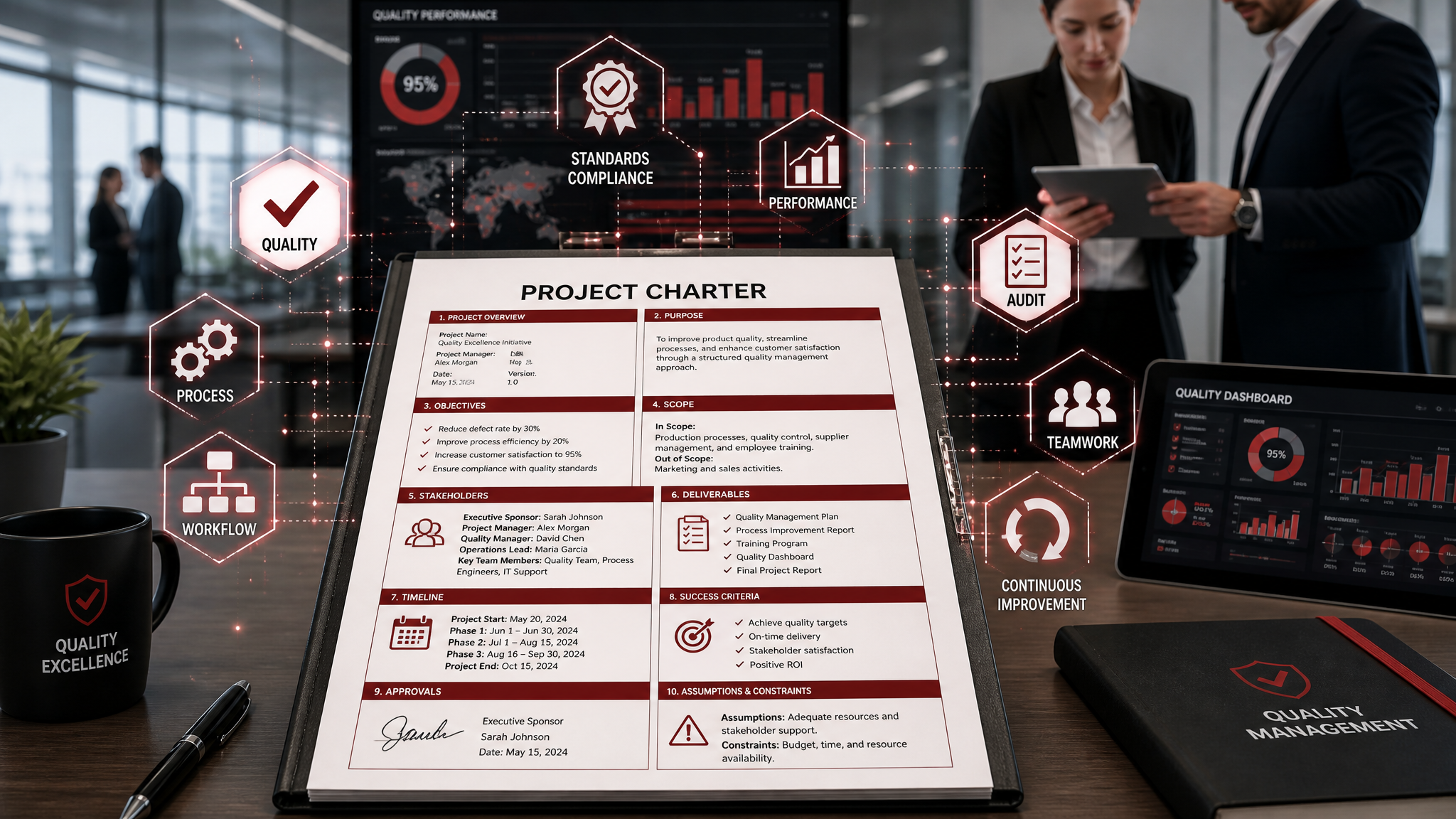
Project Charters in Quality Management: The Complete Guide for Quality Professionals
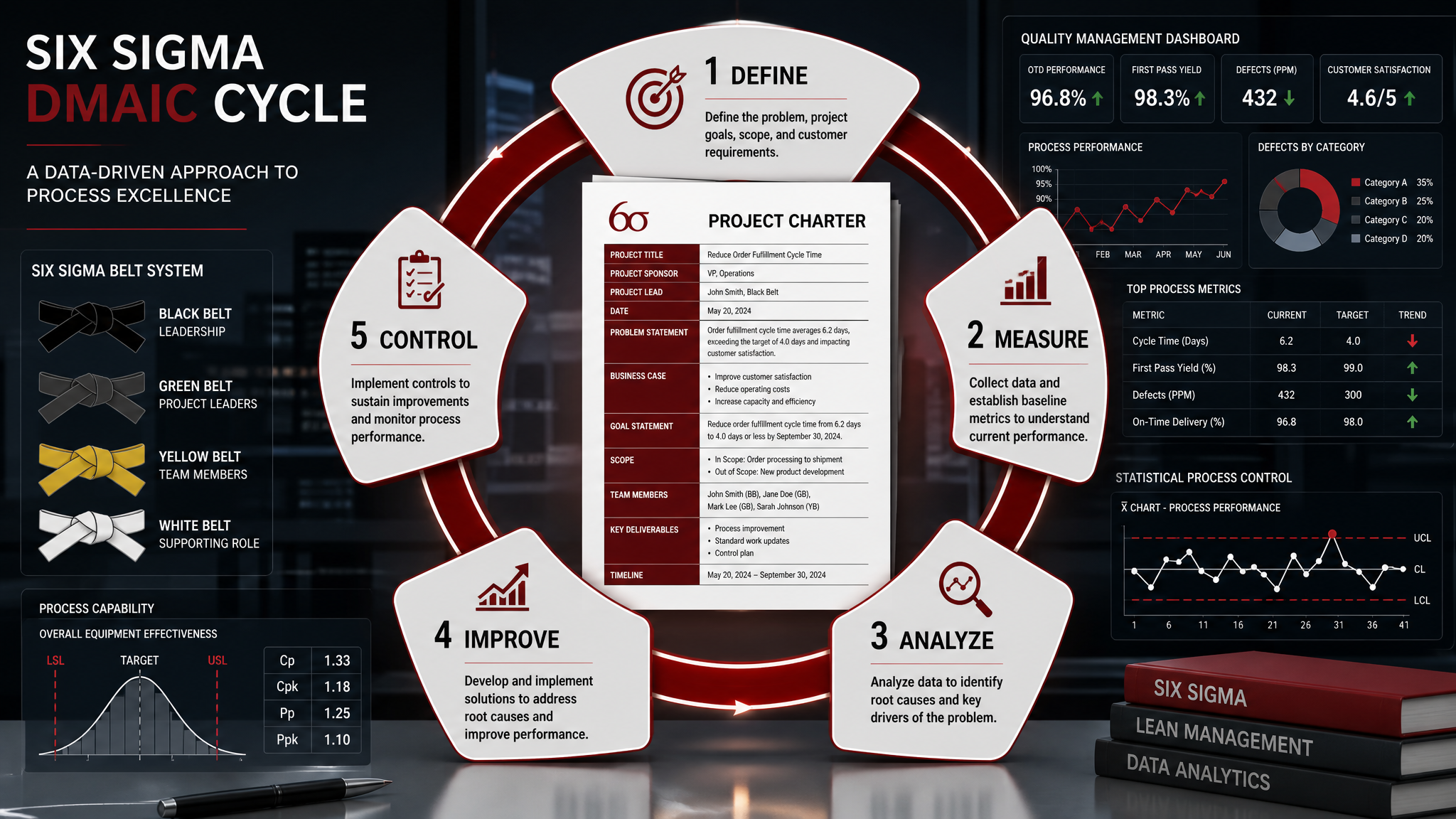
DMAIC Project Charter Template: How to Write a One-Page Six Sigma Charter That Gets Results