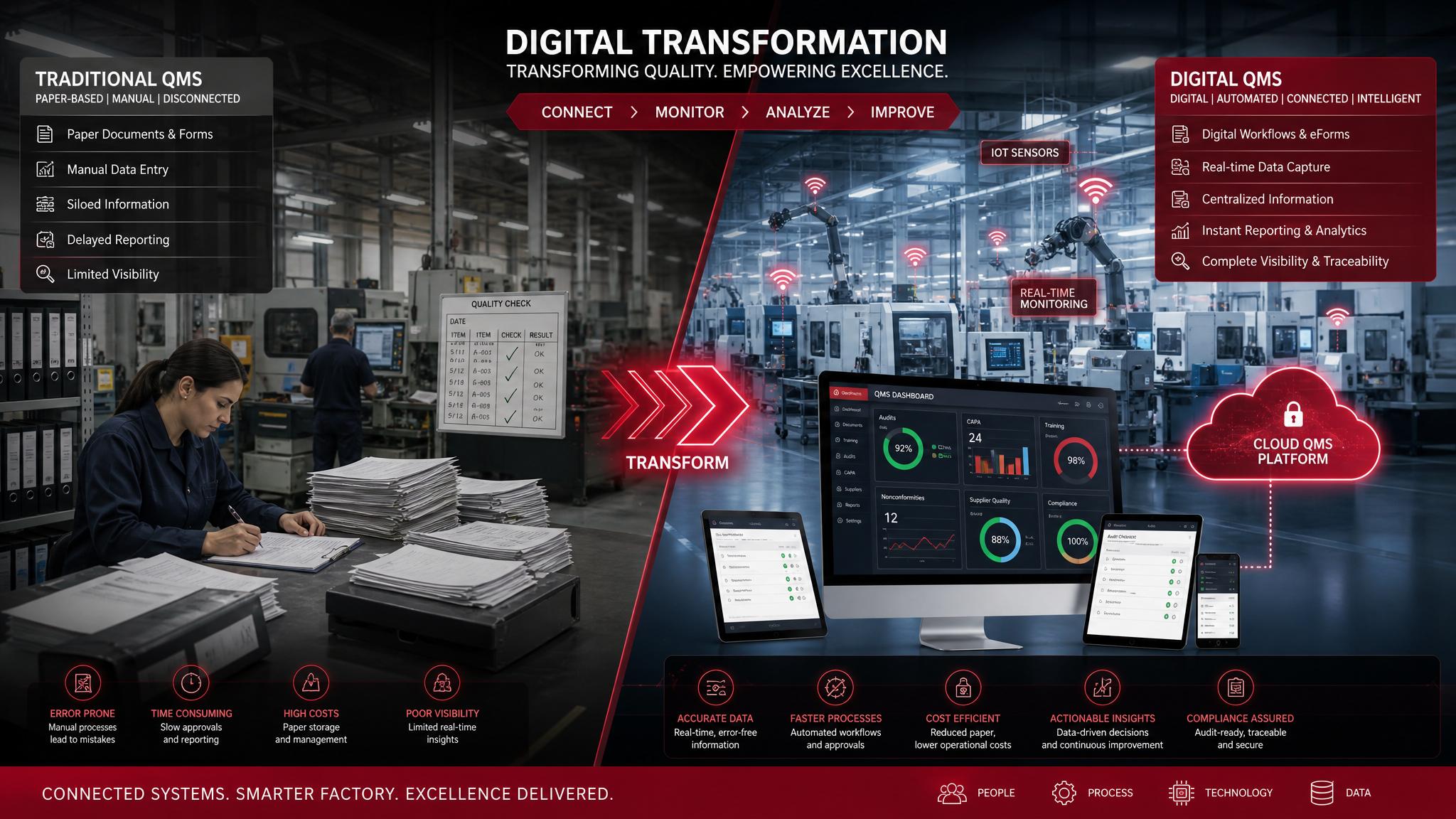
How AI Is Transforming Quality Inspection in Manufacturing
Discover how artificial intelligence and computer vision are revolutionizing quality inspection — from automated defect detection to predictive quality analytics.
John Lee
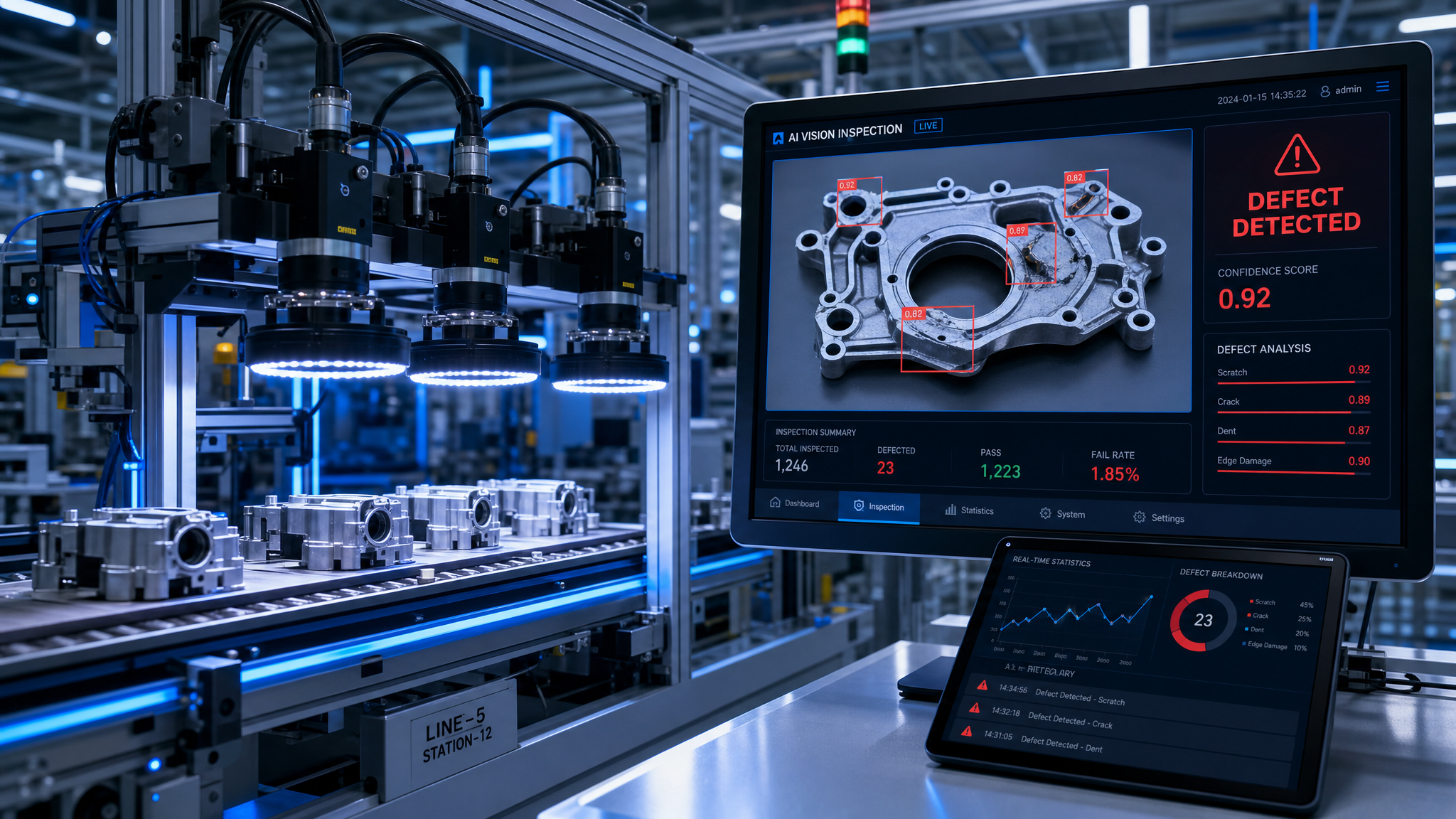
Illustrative image generated using AI; any people depicted are not real individuals.
Artificial intelligence is fundamentally changing how manufacturers approach quality inspection. Where human inspectors once squinted at parts under magnification for hours, AI-powered computer vision systems now detect defects at superhuman accuracy levels while inspecting every single part at production speed. This shift represents one of the most practical and high-ROI applications of AI in manufacturing.
The Limitations of Traditional Inspection
Human visual inspection has been the standard for decades, but it has inherent limitations. Human attention degrades over time — studies show that inspector accuracy drops by 20-30% after just 30 minutes of continuous visual inspection. Subjective judgment leads to inconsistency between inspectors and shifts. And 100% inspection by humans is prohibitively expensive for high-volume production.
These limitations create a quality gap: defects escape to customers despite significant inspection investments. AI-based inspection addresses these limitations directly.
How AI Vision Systems Work
Modern AI inspection systems use deep learning algorithms trained on thousands of images of good and defective parts. The system learns to recognize subtle defect patterns that might be invisible to the human eye — surface scratches at the micron level, subtle color variations, dimensional deviations, and surface texture anomalies.
The typical architecture includes high-resolution cameras (often multiple angles), controlled lighting systems, edge computing hardware for real-time processing, deep learning models trained on your specific products, and integration with production systems for sorting and data collection.
Real-World Applications
AI inspection is being deployed across manufacturing sectors. In automotive manufacturing, AI vision systems inspect painted surfaces for defects like orange peel, runs, and color variation at speeds impossible for human inspectors. In electronics, they verify solder joint quality and component placement on circuit boards. In medical device manufacturing, they inspect critical surfaces for contamination and dimensional conformity.
Predictive Quality: The Next Frontier
Beyond inspection, AI is enabling predictive quality — the ability to forecast quality outcomes before defects occur. By analyzing process data in real-time, AI models can detect process drift before it produces defective parts, predict tool wear and recommend replacement before quality degrades, correlate raw material variations with downstream quality outcomes, and optimize process parameters for consistent quality.
This shift from detecting defects to preventing defects represents a fundamental change in quality management philosophy — moving from reactive to proactive, from inspection-dependent to process-dependent.
Implementation Roadmap
Start with a pilot project on your highest-volume or highest-defect-rate product line. Collect training data (images of good and defective parts), work with a solution provider to develop and validate the AI model, integrate with your production line, and measure results against your baseline. Plan for 3 to 6 months for a first implementation, with ongoing optimization as the system learns from more data.
Frequently Asked Questions
How accurate is AI-based visual inspection compared to human inspectors?
What is the ROI of implementing AI quality inspection?
Does AI inspection replace human quality inspectors entirely?
About the Author
John Lee
Founder & Quality Systems Architect
John Lee brings over 20 years of hands-on experience in quality management across automotive, aerospace, and medical device manufacturing. As the founder of IntelligentQMS, he has helped organizations worldwide implement robust quality management systems that drive operational excellence.