ISO 13485 for Medical Device Manufacturers: Quality System Essentials
Learn the essential requirements of ISO 13485:2016 for medical device quality management systems, including design controls, risk management, and regulatory considerations.
John Lee
Illustrative image generated using AI; any people depicted are not real individuals.
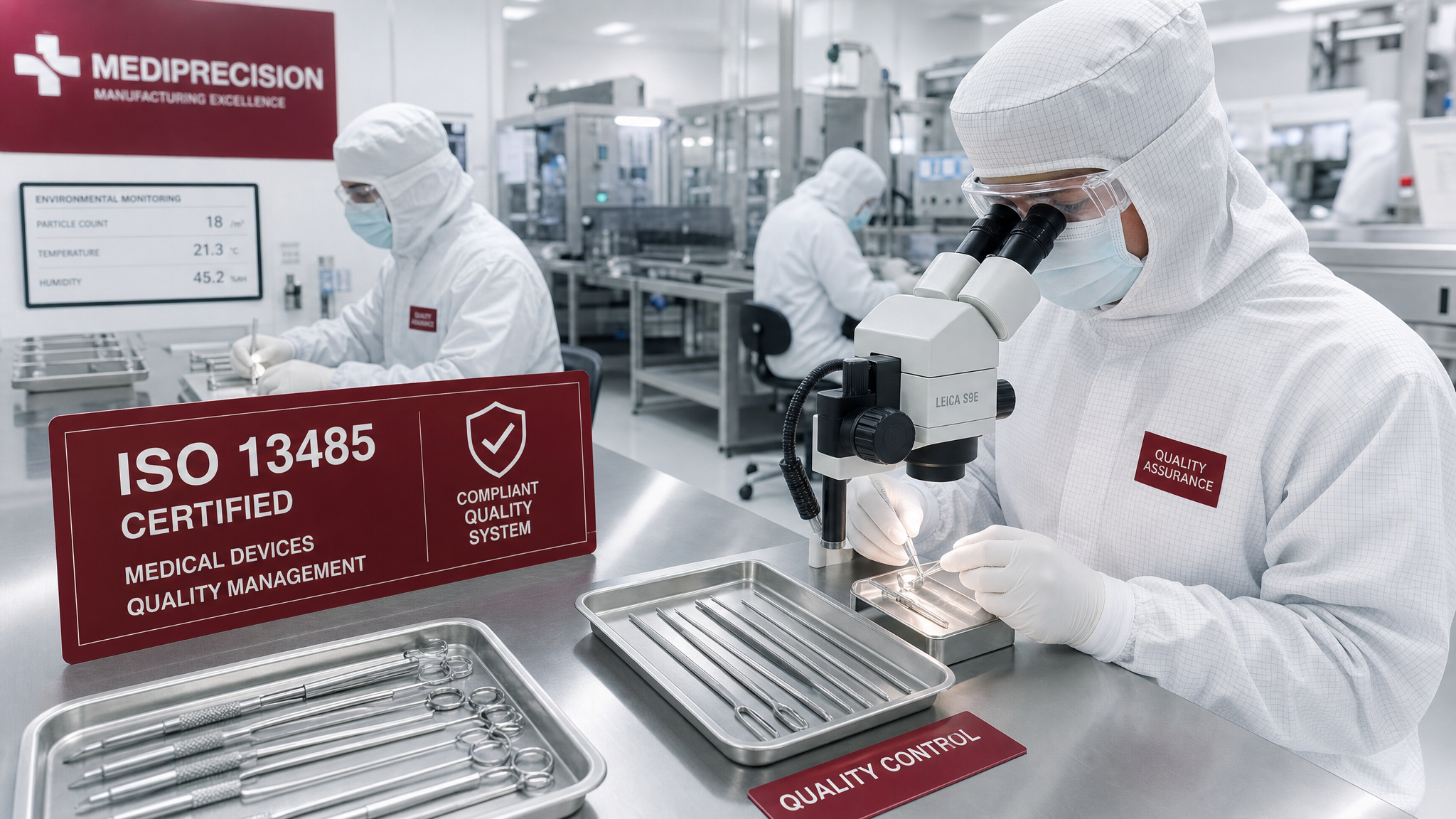
Medical device manufacturing operates in one of the most heavily regulated environments in the world. ISO 13485:2016 provides the quality management framework specifically designed for organizations involved in the design, production, installation, and servicing of medical devices. Understanding its unique requirements is critical for market access and patient safety.
Why ISO 13485 Exists
While ISO 9001 provides a general quality management framework, medical devices require additional controls due to their potential impact on human health and safety. ISO 13485 was developed to address these specific needs, providing a regulatory-aligned quality system that satisfies requirements from regulatory bodies worldwide, including the FDA, European Commission (MDR/IVDR), and Health Canada.
Key Requirements Unique to ISO 13485
Design Controls
Perhaps the most significant difference from ISO 9001, design controls in ISO 13485 provide a structured approach to product development. The design control process includes design and development planning with clear milestones, documented design inputs (user needs, regulatory requirements, standards), design outputs that can be verified against inputs, formal design reviews at predetermined stages, design verification (does the output meet the input?), design validation (does the device meet user needs?), and design transfer to production.
Each phase must be documented with clear evidence of conformity. Design history files (DHFs) maintain the complete record of your design and development activities.
Risk Management Integration
ISO 13485 requires risk management to be integrated throughout the product lifecycle, aligned with ISO 14971 (Application of Risk Management to Medical Devices). This includes hazard identification and analysis, risk estimation and evaluation, risk control implementation, and residual risk evaluation and monitoring.
Traceability Requirements
Medical device manufacturers must maintain traceability records for all components and materials used in their devices. This means you need robust systems for lot and batch tracking, unique device identification (UDI), supplier material traceability, and distribution records that can support recalls if necessary.
Regulatory Compliance Infrastructure
Unlike ISO 9001, ISO 13485 explicitly requires organizations to identify applicable regulatory requirements for each market where their devices are sold. Your quality system must include procedures for communicating with regulatory authorities, submitting regulatory filings, maintaining post-market surveillance data, and managing field safety corrective actions.
Documentation Requirements
ISO 13485 maintains more prescriptive documentation requirements than ISO 9001:2015. A quality manual is still required (unlike ISO 9001:2015), and specific procedures must be documented for document control, record control, training, risk management, design and development, purchasing, production and service provision, monitoring and measurement, internal audit, corrective action, and advisory notices.
Validation of Processes
Processes whose output cannot be verified by subsequent monitoring or measurement must be validated. This is particularly important for sterilization processes, software validation, and manufacturing processes like welding, soldering, or bonding. Validation must demonstrate the ability to consistently achieve planned results.
Getting Started
If you're a medical device manufacturer implementing ISO 13485 for the first time, start with your regulatory strategy. Understand which markets you're targeting, what regulatory submissions are required, and how your quality system needs to support those submissions. Then build your QMS around those requirements, ensuring design controls and risk management are embedded from day one.
Frequently Asked Questions
What is the difference between ISO 13485 and ISO 9001 for medical devices?
Does ISO 13485 certification satisfy FDA requirements?
What are design controls in ISO 13485?
About the Author
John Lee
Founder & Quality Systems Architect
John Lee brings over 20 years of hands-on experience in quality management across automotive, aerospace, and medical device manufacturing. As the founder of IntelligentQMS, he has helped organizations worldwide implement robust quality management systems that drive operational excellence.