IATF 16949 vs ISO 9001: Key Differences Every Automotive Supplier Must Know
Understand the critical differences between IATF 16949 and ISO 9001, and learn what additional requirements automotive suppliers face when pursuing IATF certification.
John Lee
Illustrative image generated using AI; any people depicted are not real individuals.
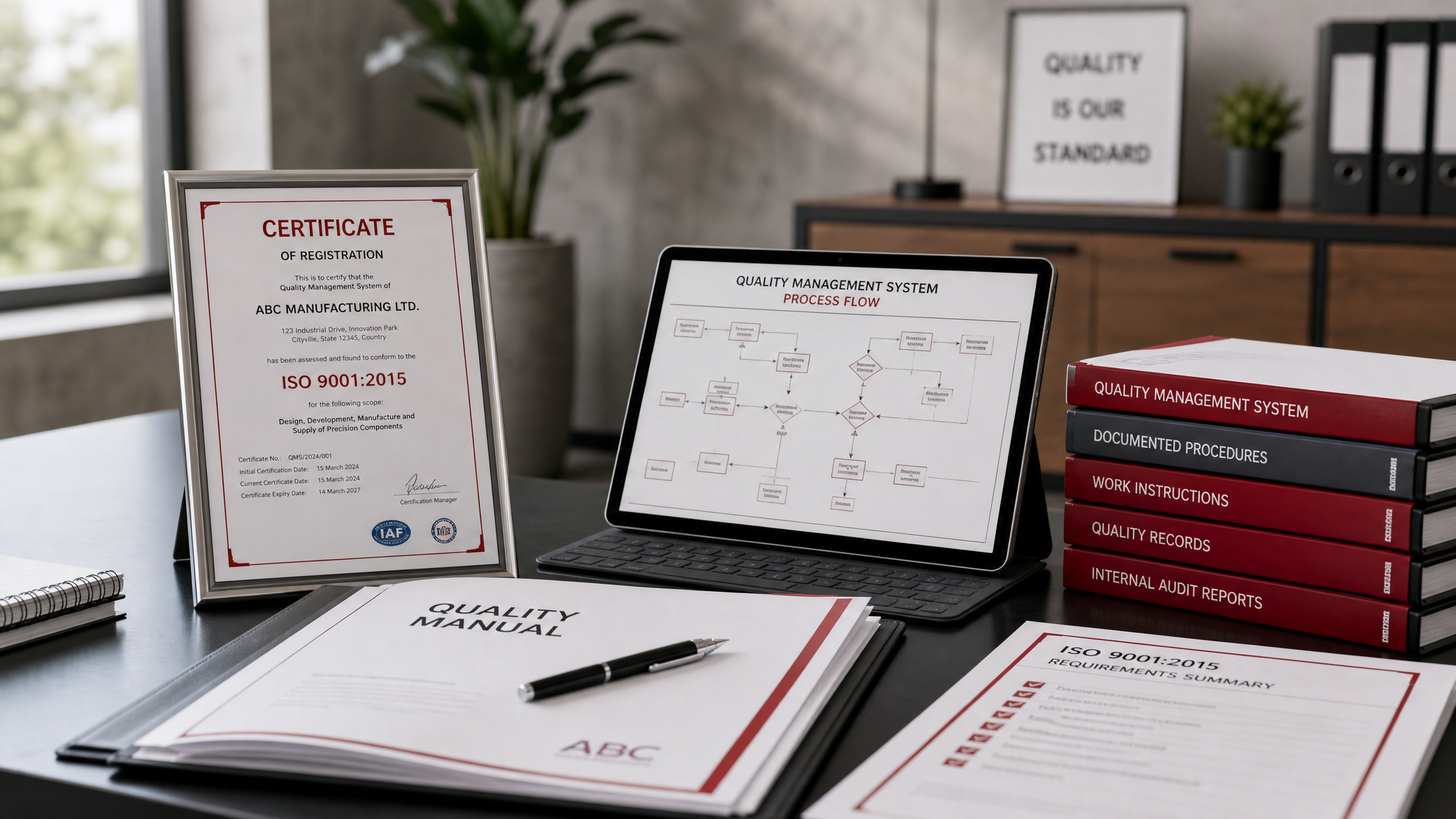
If you're an automotive supplier — or aspiring to become one — understanding the relationship between IATF 16949 and ISO 9001 is essential. While ISO 9001 provides the universal quality management framework, IATF 16949 builds upon it with rigorous, automotive-specific requirements that reflect the industry's zero-defect culture.
The Foundation: ISO 9001:2015
ISO 9001:2015 is the world's most widely adopted quality management standard. It establishes the baseline requirements for any QMS — process approach, risk-based thinking, customer focus, and continual improvement. It's applicable to any industry and any size organization.
For many manufacturers, ISO 9001 certification is sufficient. However, automotive OEMs and Tier 1 suppliers increasingly require their supply chain partners to demonstrate compliance with IATF 16949.
IATF 16949: The Automotive Overlay
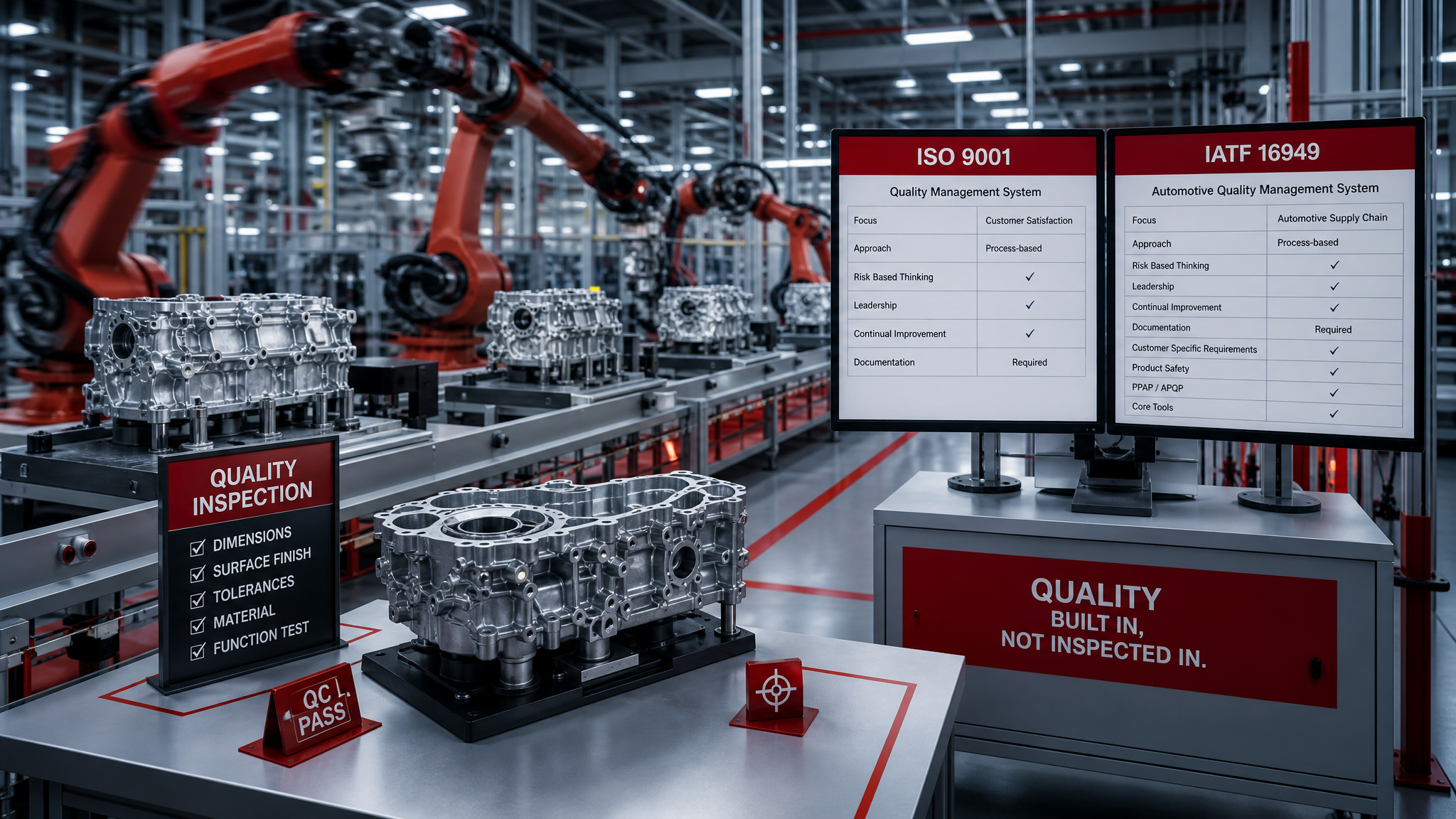
IATF 16949:2016 is not a standalone standard — it's a supplement to ISO 9001:2015. It contains the full text of ISO 9001 plus approximately 100 additional automotive-specific requirements. These additions reflect the unique demands of automotive manufacturing, where safety-critical components and high-volume production create elevated quality expectations.
Key Differences That Matter
1. Product Safety Requirements
IATF 16949 introduces explicit product safety requirements that don't exist in ISO 9001. Organizations must have documented processes for managing safety-related products, including escalation procedures when safety issues are identified. This includes product safety representatives, risk analysis for product safety, and special handling of safety-critical characteristics.
2. Core Quality Tools
While ISO 9001 references risk management broadly, IATF 16949 mandates specific quality tools: APQP (Advanced Product Quality Planning), PPAP (Production Part Approval Process), FMEA (Failure Mode and Effects Analysis), MSA (Measurement System Analysis), and SPC (Statistical Process Control). These are not optional — they're fundamental requirements.
3. Customer-Specific Requirements (CSRs)
IATF 16949 requires organizations to identify and comply with customer-specific requirements from each OEM they supply. These CSRs can add significant additional requirements beyond the standard itself, and they vary by customer.
4. Warranty Management
The standard requires a warranty management process including NTF (No Trouble Found) analysis. Organizations must analyze warranty returns, field failures, and customer complaints to drive product and process improvements.
5. Manufacturing Feasibility
IATF 16949 requires a multidisciplinary approach to manufacturing feasibility analysis. Before accepting a new contract, organizations must evaluate whether they can consistently meet all requirements at the quoted volume and timeline.
The Audit Difference
IATF 16949 audits are significantly more rigorous. Only IATF-recognized certification bodies can issue certificates. Auditors must have automotive industry experience. The audit process includes a process audit approach that traces products through your entire system, and any major nonconformity can result in certificate suspension.
Making the Transition
If you're already ISO 9001 certified, you have a solid foundation. The gap analysis should focus on the automotive-specific additions — core tools, product safety, customer-specific requirements, and warranty management. Plan for 6 to 12 months of additional preparation beyond your ISO 9001 baseline.
Frequently Asked Questions
Is ISO 9001 certification required before pursuing IATF 16949?
What is the APQP process required by IATF 16949?
How much does IATF 16949 certification cost compared to ISO 9001?
About the Author
John Lee
Founder & Quality Systems Architect
John Lee brings over 20 years of hands-on experience in quality management across automotive, aerospace, and medical device manufacturing. As the founder of IntelligentQMS, he has helped organizations worldwide implement robust quality management systems that drive operational excellence.