Building Effective Supplier Scorecards: Metrics That Drive Performance
Design supplier scorecards that go beyond simple ratings. Learn which metrics matter most, how to weight them, and how to use scorecard data to drive supplier improvement.
John Lee
Illustrative image generated using AI; any people depicted are not real individuals.
A well-designed supplier scorecard is one of the most effective tools for managing and improving supplier performance. Yet many organizations use scorecards that are either too simplistic (pass/fail) or too complex (50+ metrics that nobody acts on). The key is finding the right balance — metrics that are meaningful, measurable, and actionable.
Designing Your Scorecard Framework
Start with the end in mind: what supplier behaviors do you want to encourage? Your scorecard should align with your organization's strategic quality objectives. For most manufacturers, four categories cover the essential dimensions of supplier performance.
Quality Performance (Typical Weight: 35–40%)
This is the cornerstone of your scorecard. Key metrics include incoming inspection defect rate (PPM), lot acceptance rate, number of supplier corrective action requests (SCARs), SCAR closure effectiveness and timeliness, and customer complaints traceable to supplier quality.
Delivery Performance (Typical Weight: 25–30%)
Reliable delivery is critical for lean manufacturing operations. Track on-time delivery rate (measured against confirmed dates), quantity accuracy, lead time consistency, and flexibility in responding to schedule changes.
Cost and Commercial (Typical Weight: 15–20%)
While price isn't everything, cost management matters. Consider total cost of quality (including inspection, rework, and warranty costs), year-over-year cost reduction initiatives, invoice accuracy, and competitiveness relative to market benchmarks.
Responsiveness and Partnership (Typical Weight: 10–15%)
This category captures the intangibles that make a supplier relationship work: communication timeliness and quality, willingness to participate in joint improvement projects, documentation accuracy and completeness, and proactive notification of potential issues.
Scoring Methodology
Use a consistent scoring scale across all metrics. A 1-to-5 scale works well: 5 = Exceptional (exceeds requirements), 4 = Good (meets all requirements), 3 = Acceptable (meets minimum requirements), 2 = Needs Improvement (below requirements), 1 = Unacceptable (significant deficiencies). Calculate weighted scores for each category and an overall composite score. Establish clear threshold levels for each rating tier.
Making Scorecards Actionable
The scorecard itself has no value — the actions it drives are what matter. Share results with suppliers transparently. Conduct face-to-face reviews for strategic suppliers. Require formal improvement plans for underperforming areas. Link scorecard results to sourcing decisions and contract renewals.
Leveraging Technology
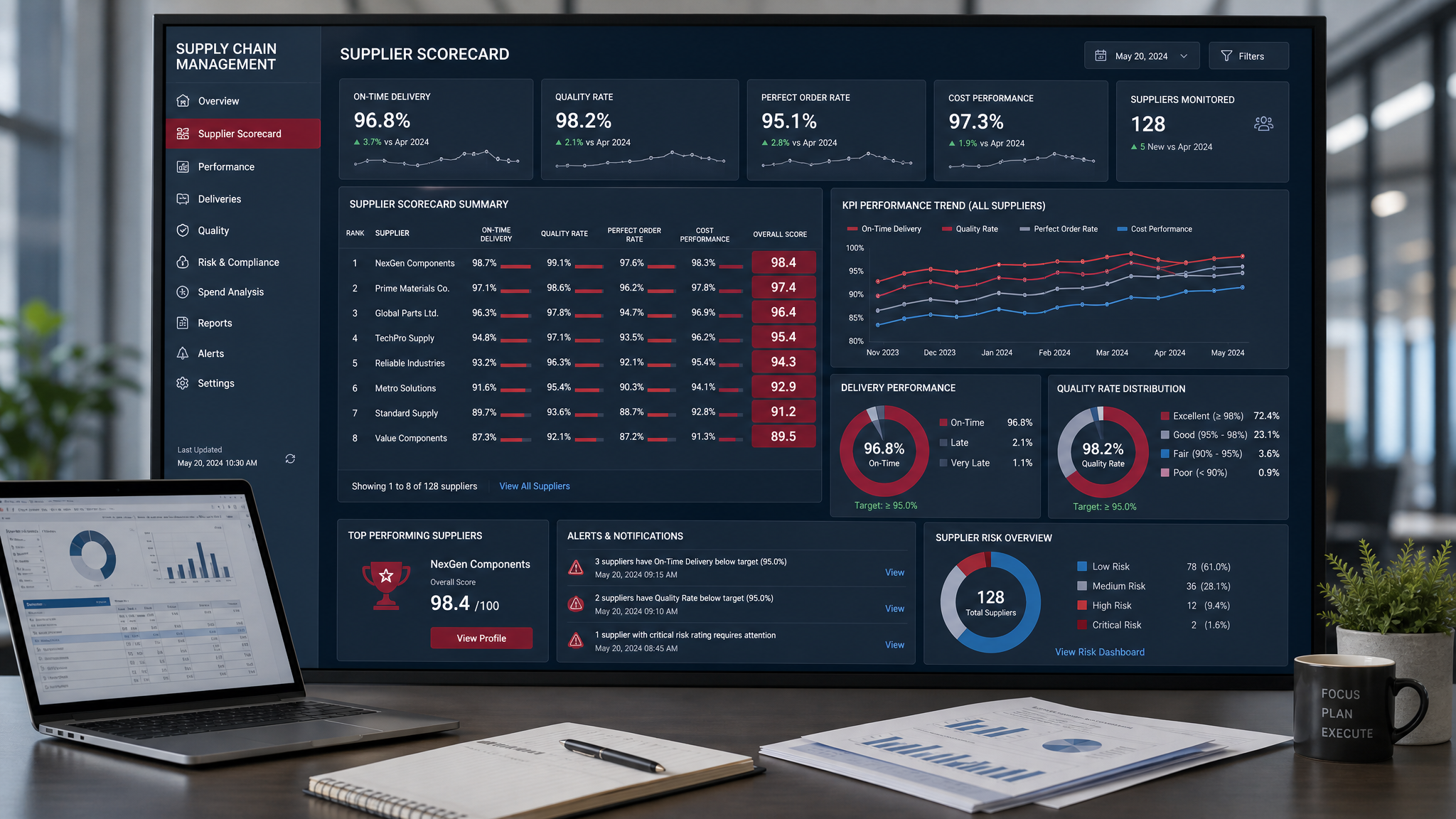
Modern supplier quality management systems can automate much of the data collection and scoring process. Real-time dashboards give both your team and your suppliers visibility into performance trends. Automated alerts can flag performance drops before they become critical. Digital platforms also make it easier to manage corrective actions and track improvement progress across your entire supply base.
Frequently Asked Questions
What metrics should be included in a supplier scorecard?
How often should supplier scorecards be reviewed?
What actions should be taken for low-scoring suppliers?
About the Author
John Lee
Founder & Quality Systems Architect
John Lee brings over 20 years of hands-on experience in quality management across automotive, aerospace, and medical device manufacturing. As the founder of IntelligentQMS, he has helped organizations worldwide implement robust quality management systems that drive operational excellence.