Digital Transformation Roadmap for Quality Management Systems
Plan your QMS digital transformation journey with this practical roadmap — from paperless documentation to AI-driven analytics and Industry 4.0 integration.
John Lee
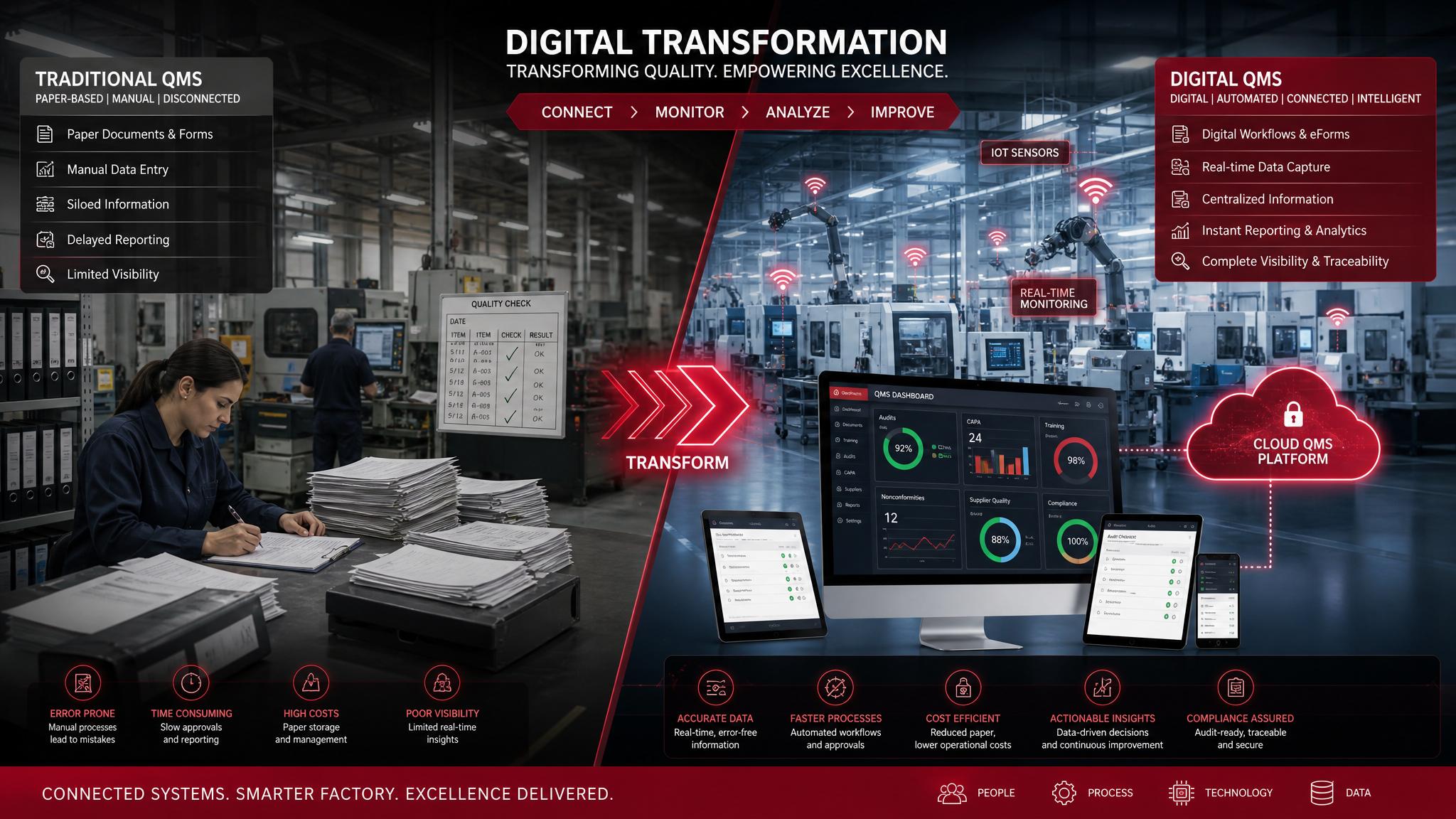
Illustrative image generated using AI; any people depicted are not real individuals.
The quality management landscape is undergoing a fundamental shift. Paper-based quality systems, manual data collection, and reactive problem-solving are giving way to digital platforms, real-time analytics, and predictive quality management. For manufacturers who embrace this transformation, the rewards are significant — but the journey requires careful planning.
Assessing Your Digital Maturity
Before planning your transformation, understand where you are today. Most organizations fall into one of four digital maturity levels:
- Level 1 – Paper-Based: Quality records are primarily paper-based. Data is collected manually and analyzed retrospectively. Document control is physical.
- Level 2 – Basic Digital: Some quality processes are digitized (spreadsheets, basic databases). Document control may be electronic, but many processes still involve paper forms and manual data entry.
- Level 3 – Connected: Quality systems are integrated with production systems. Data flows automatically from measurement devices. Real-time dashboards provide visibility into quality performance.
- Level 4 – Intelligent: AI and machine learning drive predictive quality. IoT sensors provide real-time process monitoring. Quality decisions are data-driven and increasingly automated.
Phase 1: Foundation (Months 1–12)
Start with the basics that deliver immediate value. Implement electronic document control with version management, automated workflows, and electronic signatures. Digitize quality forms and records — inspection reports, nonconformance reports, corrective actions, audit findings. Deploy a centralized quality management platform that provides a single source of truth.
The key success factor in Phase 1 is user adoption. Choose intuitive tools, provide thorough training, and demonstrate quick wins that make people's jobs easier.
Phase 2: Data-Driven (Months 6–18)
With digital foundations in place, focus on data collection and analysis. Connect measurement devices directly to your quality system for automated data capture. Build real-time dashboards for key quality metrics (PPM, Cpk, DPMO, OTD). Implement trend analysis and automated alerting for out-of-control conditions. Create digital supplier scorecards with automated data feeds.
Phase 3: Connected (Months 12–30)
Expand integration across your manufacturing ecosystem. Deploy IoT sensors for real-time environmental and process monitoring. Integrate quality data with ERP, MES, and PLM systems. Implement digital audit management with mobile audit tools. Connect customer feedback systems directly to your corrective action process.
Phase 4: Intelligent (Months 24+)
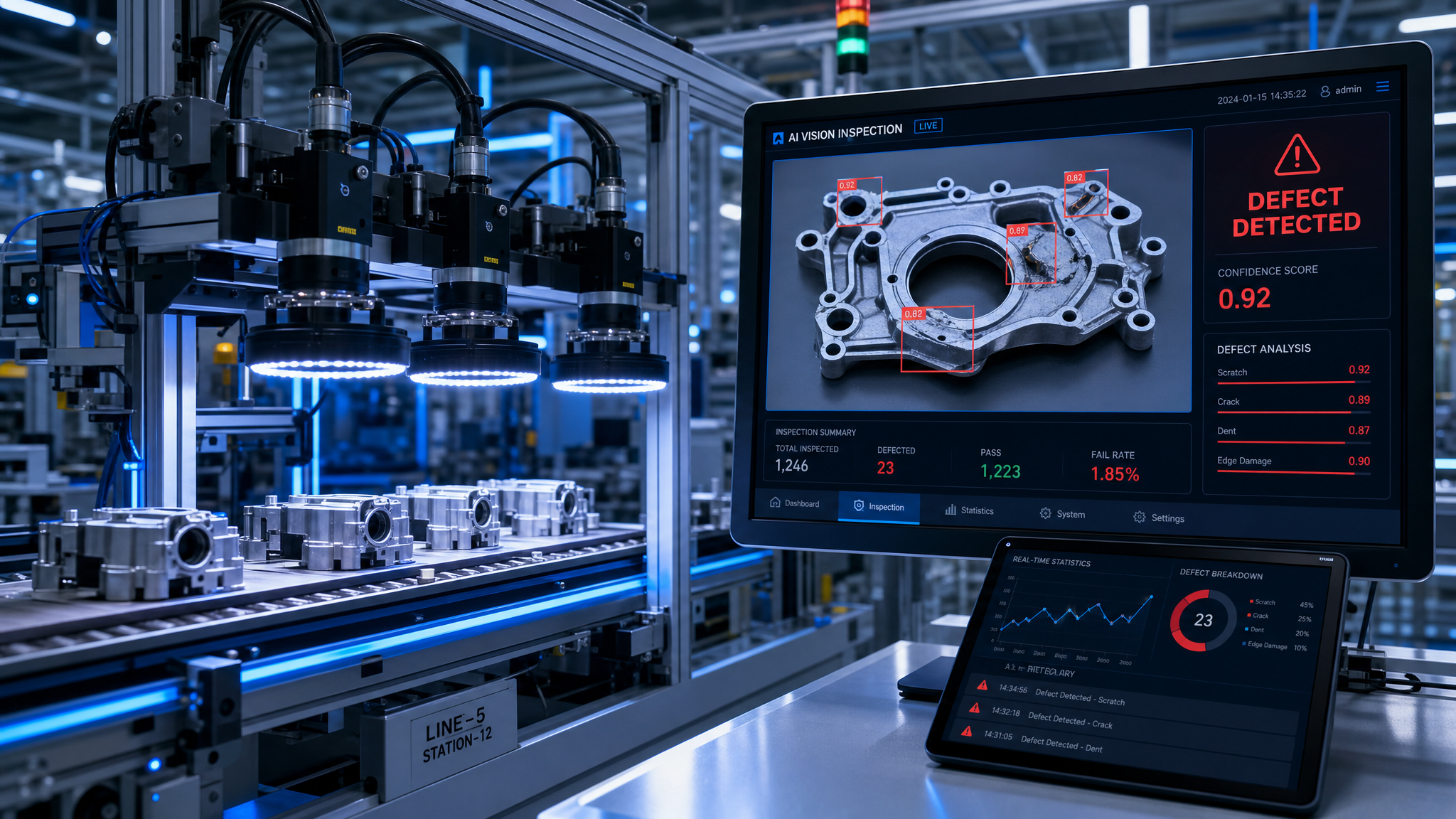
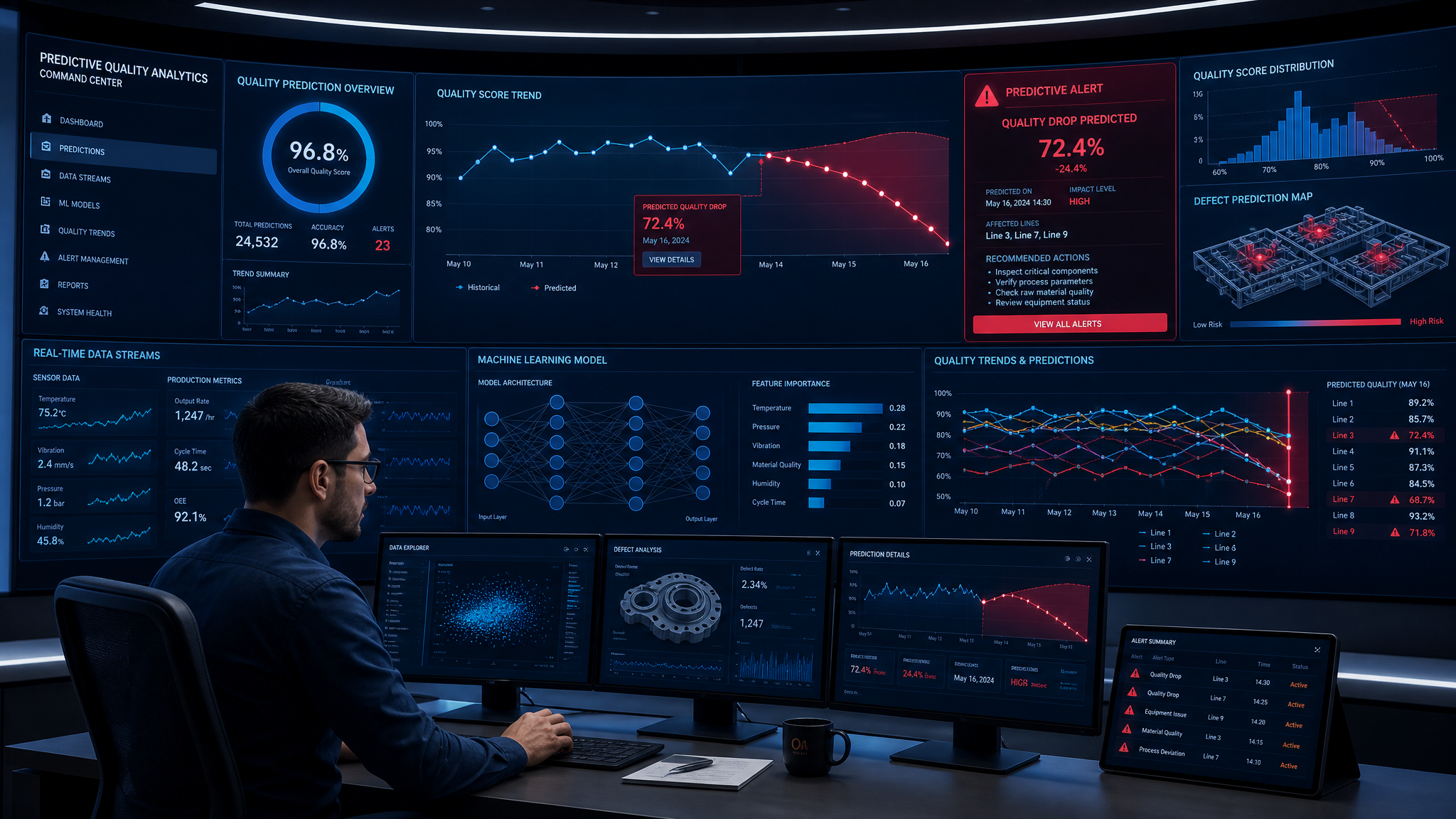
Leverage advanced analytics and AI. Deploy predictive quality models that forecast defects before they occur. Implement AI-powered visual inspection systems. Use natural language processing for automated analysis of customer complaints. Build digital twins of critical processes for simulation and optimization.
Change Management Is Key
Technology alone doesn't transform organizations — people do. Invest heavily in change management throughout your transformation journey. Executive sponsorship provides the strategic alignment and resources needed. Champion networks build grassroots support and provide peer-to-peer training. Communication plans keep everyone informed and engaged. Training programs build the skills needed to leverage new tools effectively.
Frequently Asked Questions
What is the first step in digitizing a quality management system?
How long does QMS digital transformation typically take?
What are the biggest challenges in QMS digital transformation?
About the Author
John Lee
Founder & Quality Systems Architect
John Lee brings over 20 years of hands-on experience in quality management across automotive, aerospace, and medical device manufacturing. As the founder of IntelligentQMS, he has helped organizations worldwide implement robust quality management systems that drive operational excellence.